What your Agentforce implementation is missing

So you've got Agentforce answering basic questions and creating tickets? That’s a great start, but if that’s all it’s doing, you're missing out on a big opportunity.
We’ve been working with leading travel, transport, and hospitality companies for a while now. And we’re seeing strong signs that connecting Agentforce to systems outside of Salesforce is where the real untapped value lies.
We’re talking about an improved customer experience and new ways to generate revenue through service interactions. Let's walk through the three levels of Agentforce implementation, and why moving beyond Level 1 is where things get really interesting.
The evolution of Agent AI: Three levels of implementation
Level 1: Basic case resolution
At this level, Agentforce is great for answering FAQs and solving basic cases, but it can only access information already in Salesforce, which limits what it can do because it:
- Can only access information already in Salesforce
- Has limited visibility into real-time inventory or availability
- Can't directly change bookings or process payments
- Needs to hand off to humans for more complex issues
For example, when a traveler needs to change their flight due to a meeting cancellation, Agentforce can acknowledge the request, create a case with all the relevant details, and ensure it gets routed to the right team. This is certainly helpful, but it misses the opportunity to solve the problem immediately or offer an upsell.
Here’s what a typical conversation might look like:
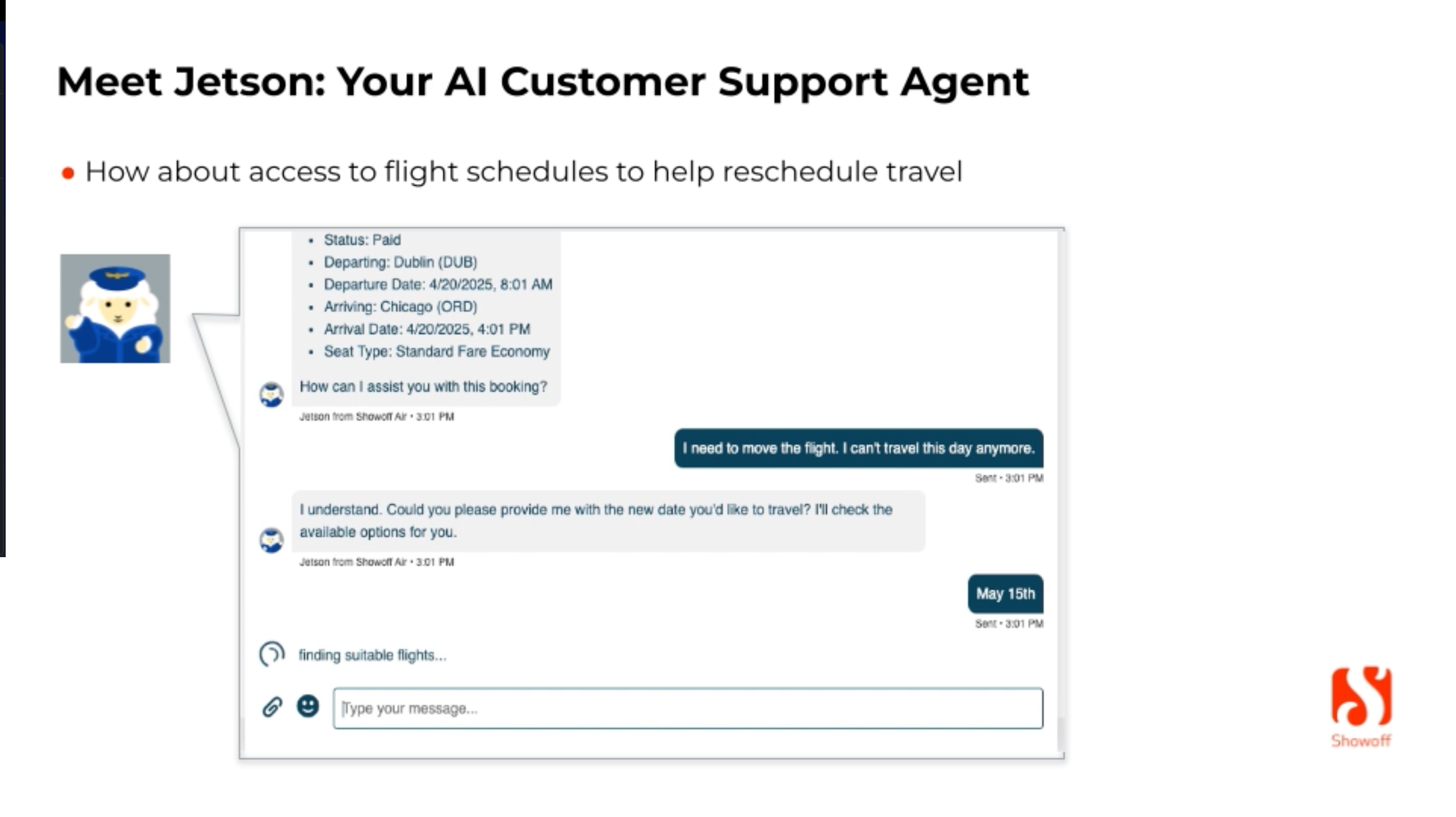
Exciting, right? Not really, but it’s a solid start. This works, and it's definitely better than no assistance at all. But there's so much more potential when you extend its functionality beyond Salesforce and start plugging in external systems too.
Level 2: Enhanced agent capabilities
This is where Agentforce breaks free from its Salesforce box and connects to your other systems. At this level, Agentforce can:
- Check your actual reservation systems and inventory
- See real-time seat/room availability
- Offer alternatives when things go sideways
- Solve problems without human handoffs
For instance, a hotel could allow Agentforce to check room availability when a guest needs to extend their stay. Instead of creating a ticket, the agent can immediately confirm if the same room is available and process the extension on the spot.
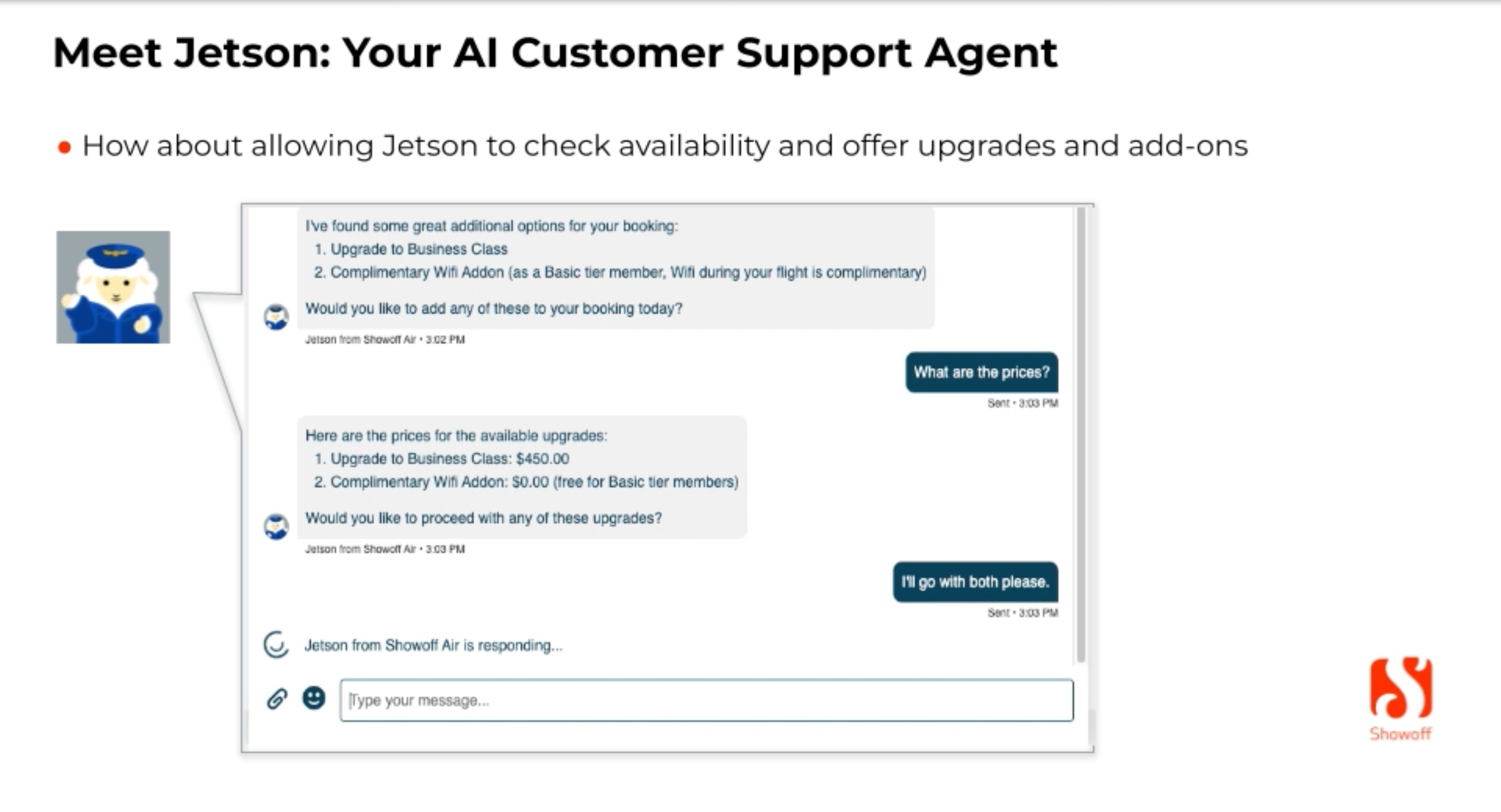
Level 3: Revenue-generating Agent skills
Here's where it gets really interesting. Level 3 turns customer service from a cost center into a profit center. At Level 3, Agentforce can:
- Process payments via Stripe
- Spot upsell opportunities during service chats
- Generate payment links right in the conversation
- Turn problems into sales without awkward handoffs
Consider a tour operator that's connected their Agentforce to both booking and payment systems. When a customer asks to reschedule a tour, the agent not only finds available dates but also notices there's a premium option with a smaller group size. It can offer the upgrade and process the payment difference right in the conversation.
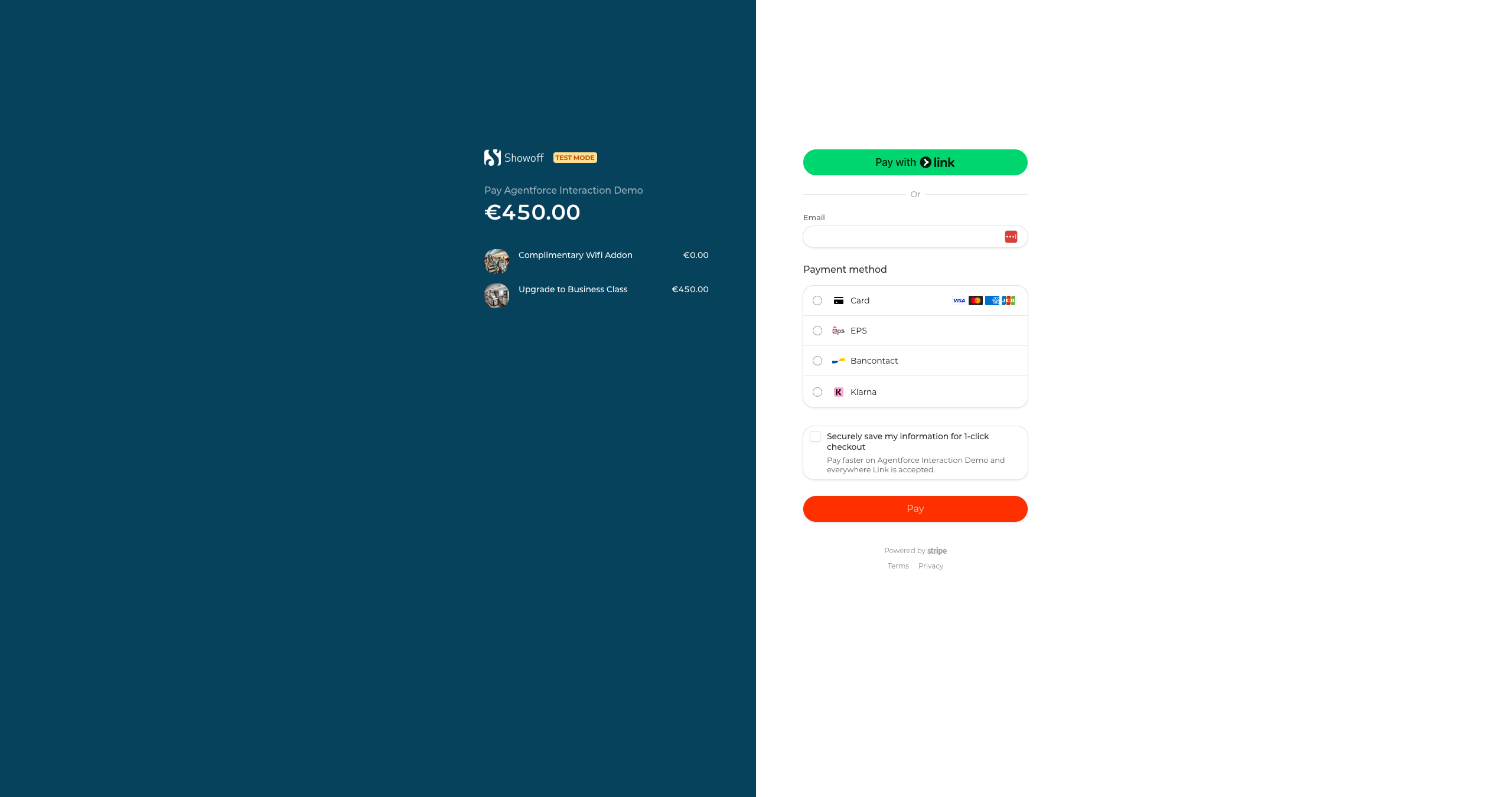
What started as a service headache just turned into extra revenue.
The technical foundation: APIs and integrations
The magic of Levels 2 and 3 happens through strategic API connections. For travel, transport, and hospitality businesses, these connections are the bridge between Agentforce and your operational systems:
Inventory and availability APIs –- Airlines need to know which seats are free on alternative flights, while tour companies need visibility into which excursions have open slots. These APIs provide real-time access to your inventory systems, enabling Agentforce to check true availability rather than just what's recorded in Salesforce.
Schedules and booking systems — Transportation companies rely on scheduling APIs to check departure times, and hotels connect to their Property Management Systems to understand which room types are available for specific dates. These connections let Agentforce see the full picture of your operational capacity.
Pricing and payment processing — Dynamic pricing APIs calculate upgrade costs in real-time, while payment processing integration enables immediate transactions. When a car rental company offers a vehicle class upgrade, Agentforce can calculate the exact price difference and process the payment.
We implement these connections through two powerful methods:
Salesforce Flow with Apex Actions lets Agentforce call external APIs directly. This native Salesforce approach creates secure, reliable connections to your external systems without complex middleware. For simpler integrations, this is often the quickest path to implementation.
Heroku's AppLink capability is our preferred solution for more complex scenarios. It makes API endpoints available to Agentforce while giving us all the benefits of the Heroku platform - scalability for high-volume periods, performance tuning capabilities, and team productivity through modern development practices.
The third critical piece is Stripe API integration for secure payments. This transforms Agentforce from a pure service tool into a revenue-generating engine. When integrated properly, your agent can generate secure payment links, process transactions, and reconcile payments with your financial systems, without human intervention.
Ready to see what Agentforce can do for you?
The travel, tourism, and hospitality companies leading their industries aren't just using Agentforce to answer questions. They're using it to solve problems, delight customers with unexpected convenience, and capture revenue that slips away when service calls end without resolution.
Want to see how you can take Agentforce to the next level? Drop us a line at hello@showoff.ie and schedule a quick chat with our team.
We'd love to show you how to turn service headaches into sales opportunities and transform your Agentforce implementation from a basic help desk to a revenue-generating powerhouse.
__________